How to Prepare For Your Move So Your New Home Feels Easier From Day One
Moving has a way of exposing just how much we’ve accumulated over the years.
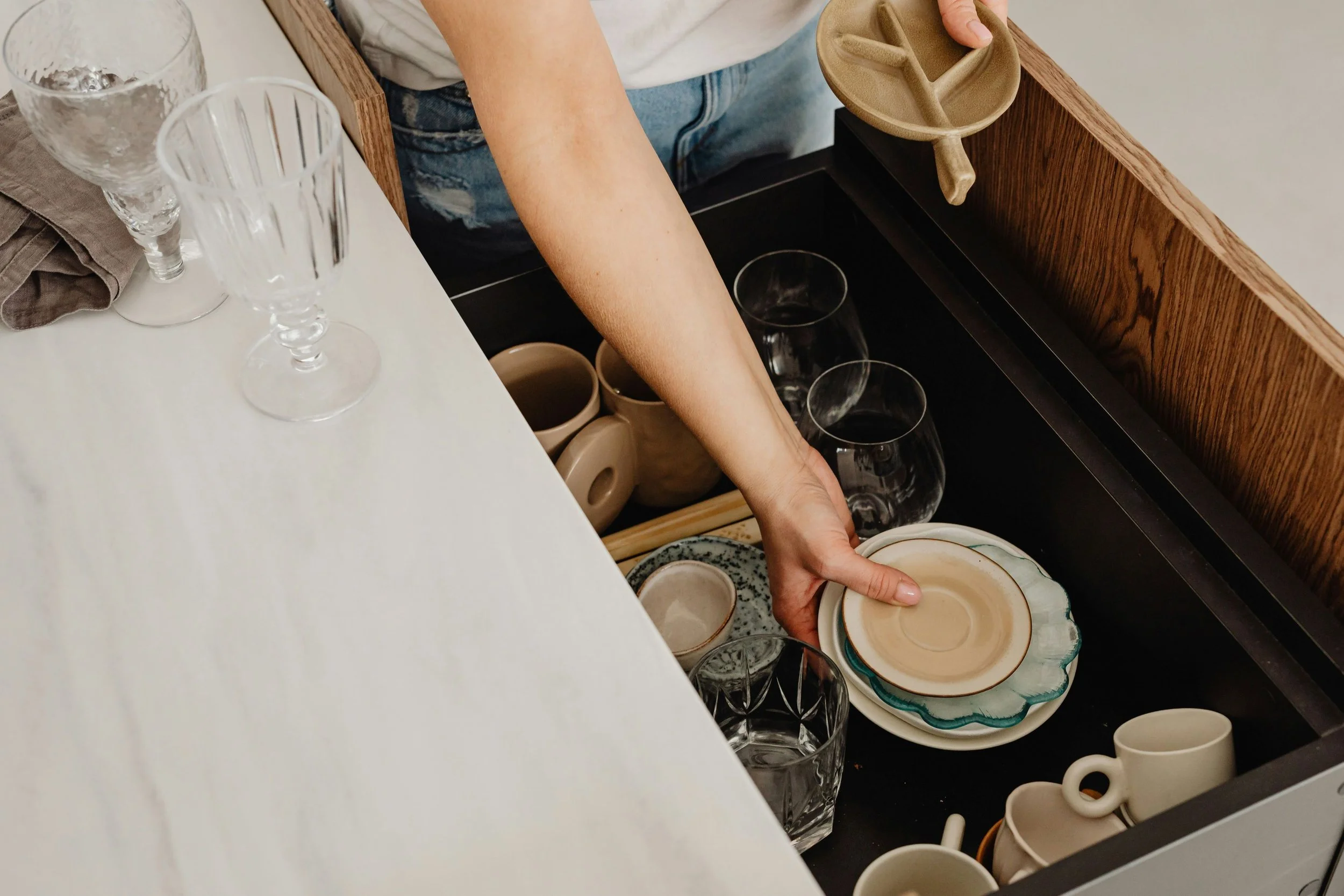
Drawers that felt “fine for now” suddenly all have to be dealt with at once. Closets packed with things we forgot we owned, cabinets full of duplicates, expired products, or items that we no longer need. Most families don’t realize how much excess they’re managing until every single item has to be touched, packed, labeled, and moved.
That’s why we tell almost every client the same thing before a move:
A move is one of the best opportunities you’ll ever have to reset your home.
And we don’t mean simply tidying everything into prettier bins. We mean rethinking how your home functions and what actually makes sense to bring into your next chapter.
Because the truth is, most people don’t move intentionally. They move quickly because they’re already surviving one chaotic season after another.
They pack room by room, just trying to get through the process, and then end up recreating the same stress and dysfunction in a new house. Sure, it may feel organized for a few weeks. But very soon, they end up with the same overflowing cabinets and cluttered drop zones.
But, if you decide to slow down and make intentional decisions, moving can also be the moment where things finally change.
Why Moving Is the Best Time to Reset Your Home
When you’re living in a home day after day, it’s easy to stop noticing what isn’t working.
You adapt.
You work around it.
You create temporary solutions that slowly become permanent.
But moving interrupts all of that. Suddenly, everything is visible again. You’re opening every drawer, sorting through every shelf, and asking questions you may not have asked in years:
Do we actually use this outdated Nintendo system?
Why do we have so many of these spatulas?
Why has this paint collection been sitting untouched for five years?
Does this ping pong table still fit our life?
That questioning pause is valuable. Instead of rushing through it, we encourage our clients to use the moving process as a chance to edit intentionally and set up their next home differently from the start.
Because organization becomes much easier when you stop trying to manage things you no longer need, use, or realistically have space for.
1 - Edit Before You Pack
One of the biggest mistakes people make before a move is packing first and deciding later.
It feels easier in the moment. Emotionally, it’s often more exciting to focus on getting to the new house than slowing down to deal with what’s in the current one. So even when we know we should edit first, many of us subconsciously rush the packing process just to move forward.
But that usually creates more work on the other side because you end up unpacking items you don’t actually want or need. You fill storage spaces too quickly, which recreates clutter before your new routines even begin.
Slowing down long enough to make intentional decisions can make a world of difference in your new home, not to mention your sanity. Ask yourself questions like:
What still serves your family?
What realistically fits your current lifestyle?
What are you holding onto simply because it’s easier to throw it into a box than to decide?
This is especially important for families moving after a major life transition.
New baby.
Downsizing.
Divorce.
Loss of a loved one.
Career change.
A move often represents more than a change of address, and belongings can carry emotional weight that makes decisions harder than expected.
That’s one reason our team approaches organizing without judgment. We understand these decisions are rarely just practical– they’re personal.
But editing before the move matters because every item you choose to bring into your new home affects how that home will function later.
2. Think in Categories, Not Just Rooms
Another common mistake we see is packing based only on where things currently live.
The problem is, most homes don’t function room by room. They function through routines.
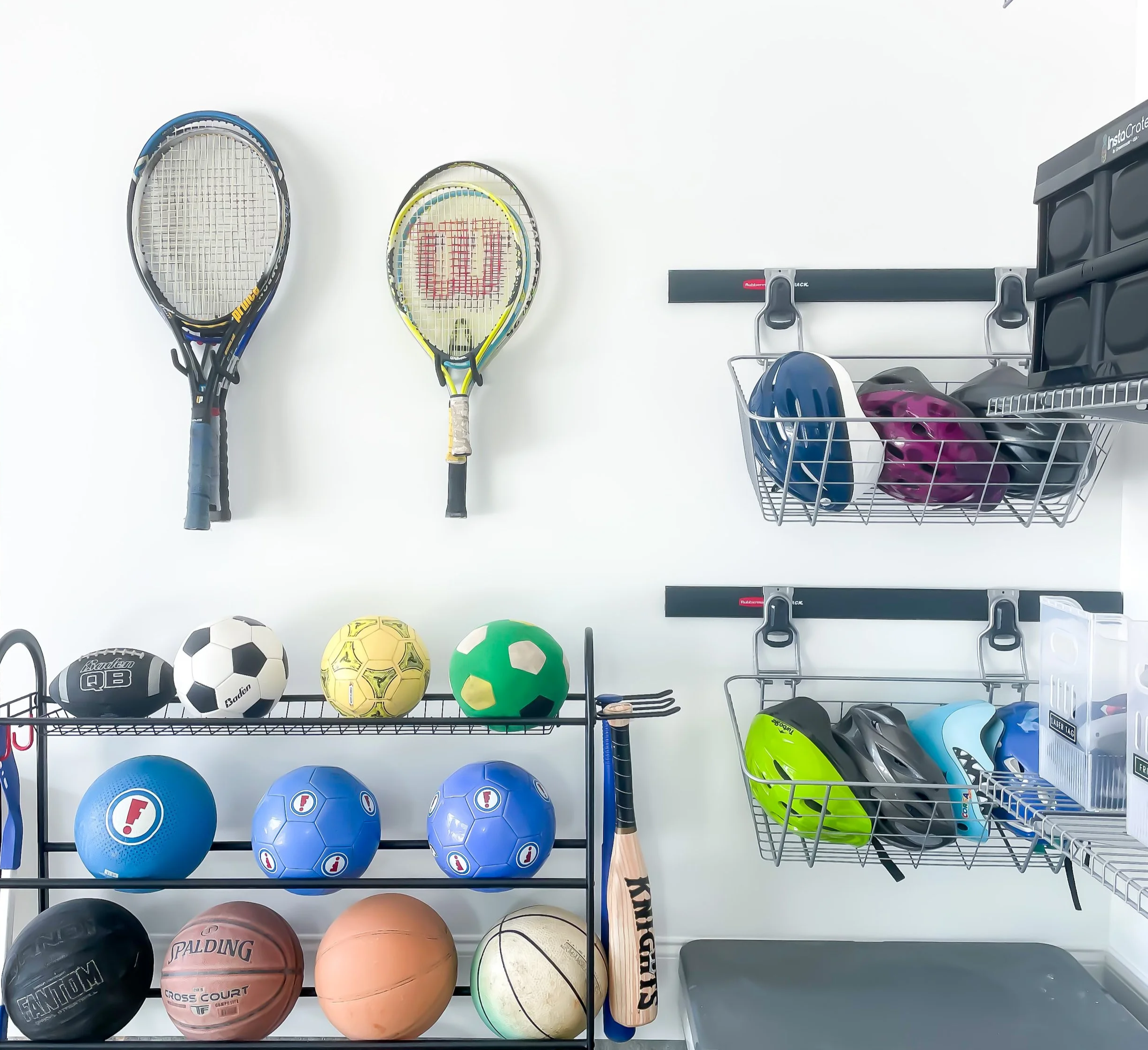
→ Kids’ sports gear may live in the garage, mudroom, laundry room, and car all at once.
→ School supplies spill between office drawers, kitchen counters, backpacks, and playrooms.
→ Entertaining pieces may be spread across multiple cabinets and storage spaces without any real system connecting them.
When preparing for a move, it helps to zoom out and think in categories instead.
Instead of asking:
“What’s in this room?”
Start asking:
“How do we actually use these items in daily life?”
This shift helps you identify duplicates, unnecessary volume, and systems that were never really working in the first place. It also helps your new home feel more intentional from the beginning because you’re organizing around how your family lives—not just where items were stored before.
3. Plan Your New Spaces Before You Arrive
One of the biggest advantages of organizing before a move is the ability to think ahead when you know where you are moving to.
This is especially helpful for families relocating to busy areas like South Charlotte, Fort Mill, Ballantyne, Lake Wylie, and Tega Cay, where school schedules, commuting, sports activities, and fast-paced routines tend to fill up quickly once life settles back in.
Most people wait until they’re surrounded by boxes in the new house before trying to figure out where things should go. By that point, exhaustion (and lots of temporary decisions) takes over, which is how clutter gets recreated so quickly.
Instead, we encourage clients to think through the functionality of the new home before unpacking begins. Ask yourself questions like:
What spaces need to support the busiest parts of your day?
What routines happen every morning and evening?
Where will backpacks land?
Shoes?
Lunches?
Dog supplies?
Charging stations?
Sports equipment?
The most functional homes are not necessarily the most minimal or aesthetically perfect. The most functional homes are the ones where daily life has been thoughtfully considered.
Even simple planning ahead can make an enormous difference in how smoothly your home operates once you move in.
4. Pack With Intention, Not Just Speed
Packing intentionally doesn’t mean moving slowly. Rather, it means making decisions now that make unpacking easier later.
Use clear labels, grouped categories, and priority boxes. Separate daily essentials from rarely used items. Think ahead about what should be unpacked first versus what can wait.
When packing is rushed and random, unpacking becomes overwhelming. Families often end up opening boxes for months, moving half-unpacked boxes from room to room, and creating temporary setups that never get fully corrected.
We see this often with kitchens, pantries, closets, and utility spaces. Once items get placed “just for now,” they tend to stay there much longer than intended, because life inevitably goes right back to the busy norm.
Intentional packing makes settling in so much easier on the other side because it allows your home to come together more naturally.
Your New Home Should Support Your Life
At the end of the day, organization is not about creating a perfect-looking house. It’s about creating a home that functions well for the people living in it.
A home where routines require less mental effort, things are easier to find, and spaces support your family instead of constantly working against you.
Moving gives you a rare opportunity to build that foundation from the start, instead of trying to fix years of accumulated frustration later.
And while unpacking boxes may only take a few days or weeks, the systems you create during a move will shape how your home feels and functions for years to come.
Need Help Preparing for a Move?
If you’re preparing for a move in the Charlotte area, our team helps clients organize, edit, pack, unpack, and thoughtfully set up their homes so they function well from day one. From pre-move decluttering to full-home unpacking and organization, we create systems designed for real life—not just move-in day.