Why Organizing One Room Never Actually Fixes the Problem
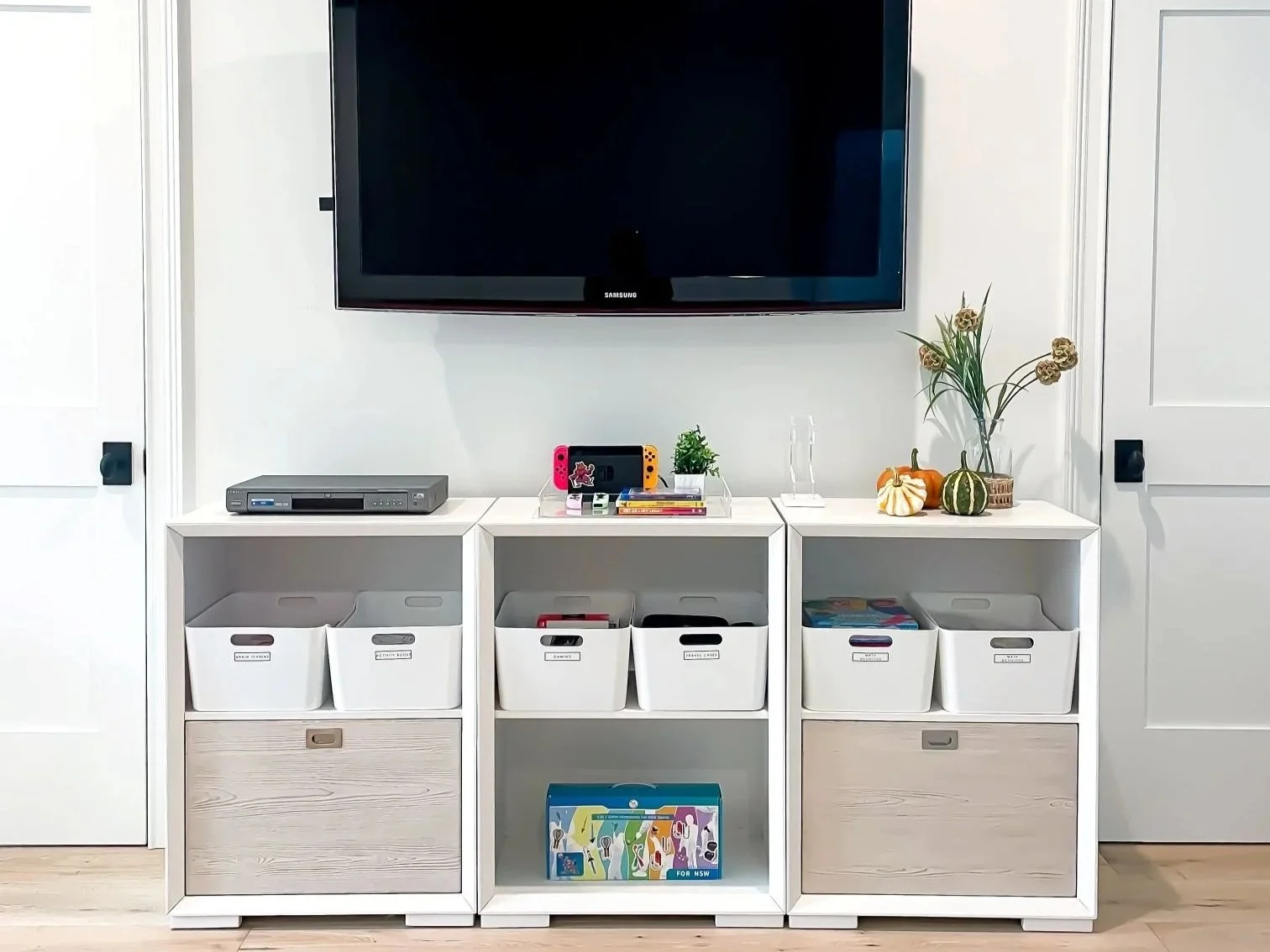
Most people don’t think they need to start with a whole-home organizing project.
They start with the pantry, or the playroom, or the overflowing junk drawer that finally pushed them over the edge after searching for scissors for the third time that week.
It makes sense. People tend to address things once they become completely unmanageable. And when life feels overwhelming, focusing on one space feels more realistic and productive than tackling an entire house all at once.
And sure, organizing one room does help temporarily.
→ A freshly organized pantry feels satisfying when you see it multiple times a day.
→ A clean mudroom creates relief because you aren’t confronted by the chaos as soon as you walk in the door.
→ A decluttered closet may even make getting dressed in the morning easier.
But for many families, that feeling doesn’t last nearly as long as they hoped it would. A few months later, the clutter inevitably creeps back in. Routines shift, and systems stop working. The room that once felt “fixed” starts to feel stressful again.
And usually, it’s not because you failed to maintain it.
It’s because most homes don’t struggle because of one messy room. They struggle because the systems throughout the home aren’t working together.
The “Start Small” Trap
There’s a lot of organizing advice online that encourages people to “just start small.”
And to a certain extent, that advice comes from a good place. Starting somewhere is better than staying stuck in overwhelm.
But what often gets missed is that homes don’t function in isolated parts.
A cluttered kitchen is rarely just a kitchen problem when everyone who walks through leaves something there that doesn’t belong.
An overflowing mudroom usually connects to laundry systems, closet space, storage limitations, or busy family schedules.
A chaotic playroom often reflects larger issues around volume or routines.
When you focus on one room without understanding the bigger picture, you may improve the appearance of the space temporarily without addressing the deeper patterns that caused the mess in the first place.
That’s why many families feel like they’re constantly organizing but never truly getting ahead. They keep fixing symptoms instead of solving the system underneath them.
Why It Never Sticks
We hear this all the time from clients:
“I organized this space before, but somehow it ended up right back where it started.”
Usually, the problem is not motivation or laziness. Most of the time, the system simply wasn’t realistic for the way the family actually lives.
We see this often with busy families throughout Charlotte, Fort Mill, Ballantyne, and Lake Wylie, where packed schedules, school activities, commuting, and fast-paced routines put constant pressure on home systems.
Maybe the bins looked beautiful, but nobody could maintain them during a busy school week.
Maybe there wasn’t enough accessible storage for daily-use items.
Maybe the family had simply outgrown the original system altogether.
And sometimes, there’s just too much volume for the space to function well long-term.
Getting a room organized and keeping it functional long-term are two very different things. It requires understanding:
how a family moves through the home
where routines naturally break down
what daily friction points exist
and what systems are realistic to maintain during busy seasons of life
Without that bigger-picture thinking, even well-organized spaces eventually start falling apart again.
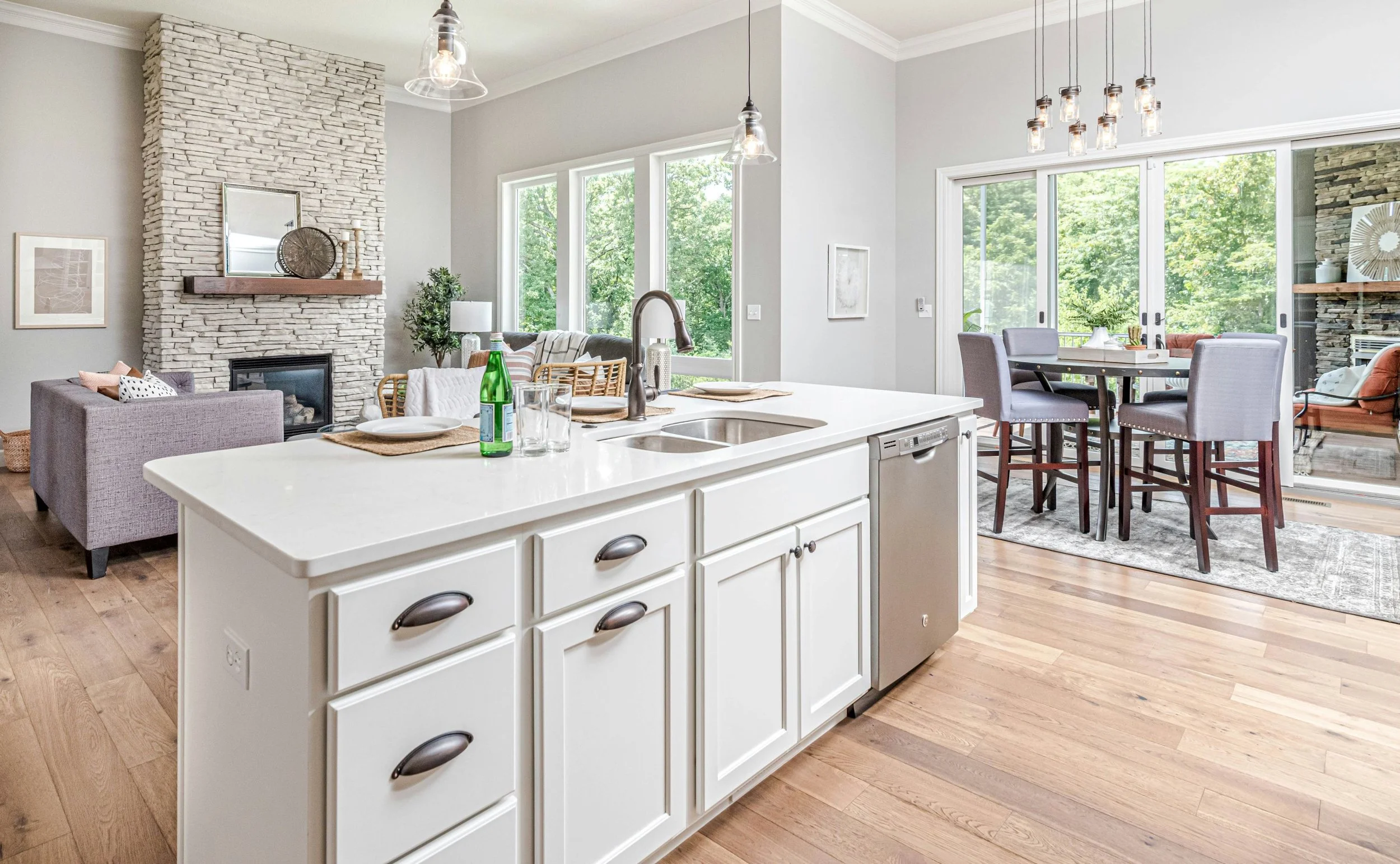
Your Home Isn’t Made of Separate Rooms
One of the biggest mindset shifts we help clients make is realizing that homes function more like ecosystems than individual spaces.
Because in a real home, everything affects something else.
→ The kitchen affects the pantry.
→ The mudroom affects the laundry room and garage.
→ Kids’ bedrooms affect the playroom, closets, and even the bathrooms.
When one area becomes overloaded, it almost always impacts related (or surrounding) spaces, too. That’s why organizing one room often creates temporary relief without creating lasting ease.
For example, you can organize a pantry beautifully, but if the kitchen cabinets are overcrowded, overflow will eventually make its way back into the pantry. You can create a functional mudroom, but if there’s no clear system for sports gear, laundry, shoes, and backpacks throughout the rest of the home, the clutter simply shifts locations. We see this constantly during whole-home projects.
Families are often frustrated by one “problem area,” but once we start walking through the home together, it becomes clear that the issue reaches much farther than a single room.
How Clutter Moves Through Your Home
Clutter rarely stays contained– it travels.
→ Mail lands on the kitchen counter because the office is overloaded.
→ Laundry piles up in bedrooms because closets are too full.
→ Kids’ items spill into living spaces because there isn’t enough accessible storage where they naturally use those items.
When homes lack clear systems, belongings slowly migrate toward the path of least resistance.
That’s why so many families feel like they’re constantly resetting the same spaces over and over again. They’re not just managing clutter– they’re managing the movement of clutter throughout the house.
And when you only organize one area at a time, you often end up relocating the problem instead of solving it.
True organization requires understanding how belongings flow through a home daily:
where items naturally collect
where routines break down
where volume exceeds storage
and where systems need to support real life more effectively
Once you start viewing your home this way, organizing becomes much less about perfection and much more about functionality.
What Actually Creates Lasting Order
The homes that stay organized long-term are usually not the homes with the most bins or the prettiest labels. They’re the homes where the systems make sense for the people living there.
That means:
editing what no longer serves your family
creating systems around actual routines
simplifying where possible
and thinking about the home as a whole instead of a collection of separate projects
Sometimes that does mean organizing multiple connected spaces together rather than one isolated room at a time. What often happens when a client only wants one space organized is that they’re left with piles of items that suddenly need a home somewhere else in the house.
Because lasting order usually comes from solving the root issue—not just improving one visible symptom.
Often, the biggest relief for our clients is realizing the problem was never that they “weren’t organized enough,” but that their home simply needed systems that better supported the way they actually live.
When your home functions well as a whole, everything starts to feel lighter and you lose the constant feeling of playing catch-up.
That’s the difference between organizing a room… and creating a home that truly works.